Date Published 14 October 2026
At Acquire Estate Agents, we are becoming increasingly concerned about the approach taken by some local authorities when issuing Notices of Intent (NOIs) to impose civil financial penalties on landlords and managing agents.
Our latest case raises some serious questions.
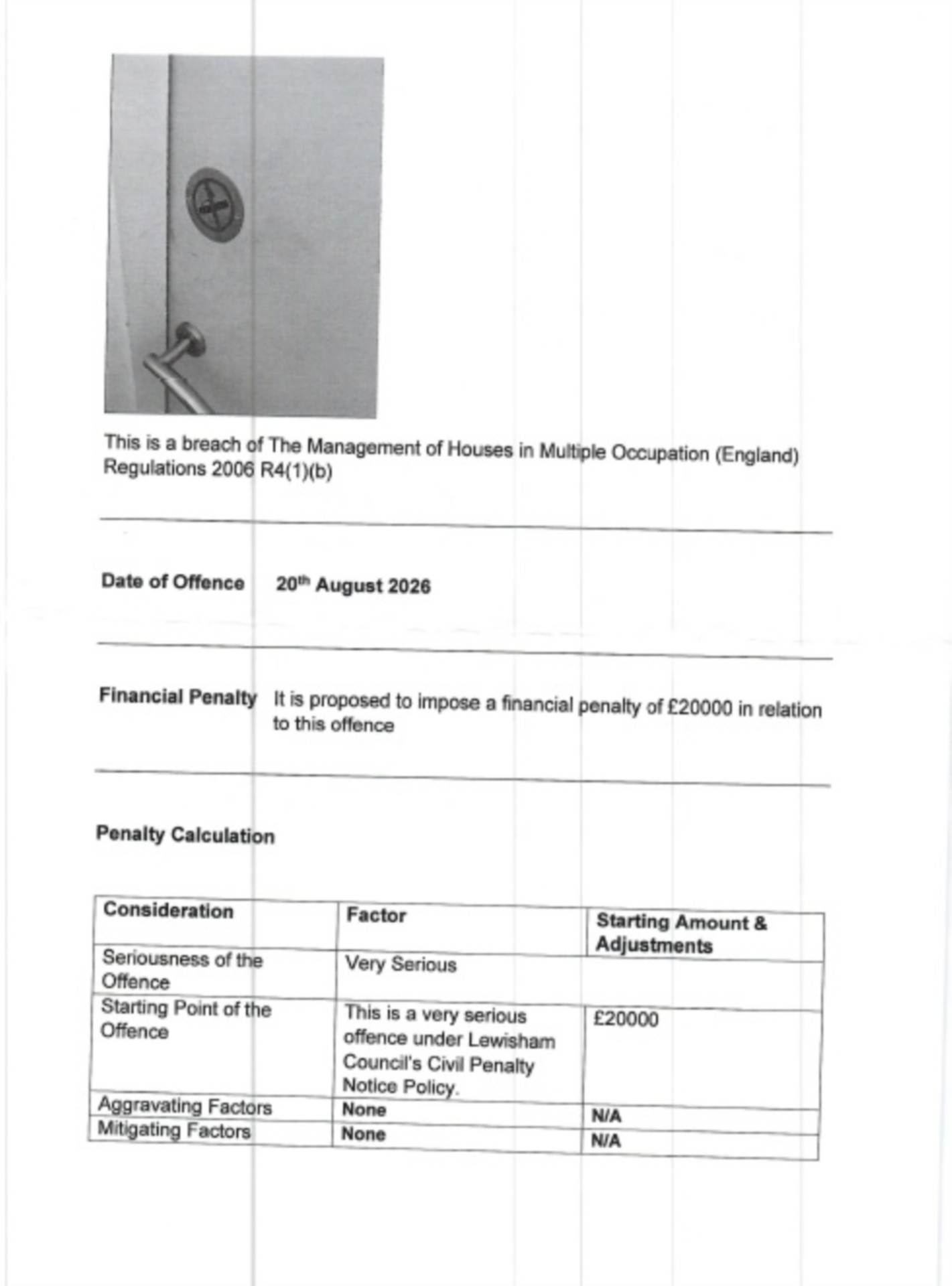
A local authority has proposed a £20,000 financial penalty for an alleged breach of Regulation 4(1)(b) of the Management of Houses in Multiple Occupation (England) Regulations 2006, against a landlord. The allegation concerns a door displaying a 'No Smoking' sign, supported in the notice by a single grainy, black-and-white photograph with no visible date.
Yes, you read that correctly. £20,000.
We question whether the evidence disclosed adequately establishes the alleged offence, let alone justifies such a serious classification and substantial proposed penalty.
A Notice of Intent is not proof of an offence. An allegation is not a conviction. And issuing a notice does not reverse the burden of proof.
When questioned, the Council stated: "The notice of intent does not itself impose the penalty. If the landlord believes that an offence hasn't been committed, this is the opportunity to make representations and prove this."
That response raises an important issue.
It is not for the landlord to prove their innocence. The burden rests with the Council to establish the alleged offence to the criminal standard of proof — beyond reasonable doubt.
Of course, landlords have the opportunity to make representations and challenge the evidence. But that does not transfer the legal burden of proof from the authority to the person accused.
We fully support legitimate enforcement of housing standards.
However, enforcement must be evidence-based, proportionate, legally justified and procedurally fair.
Landlords and agents should not be expected to accept serious allegations simply because they originate from a local authority.
At Acquire Estate Agents, our position is clear.
We will vigorously defend our clients against unfounded allegations, disproportionate penalties and enforcement decisions that cannot withstand proper legal scrutiny.
Where necessary, we will challenge decisions before the First-tier Tribunal, instruct specialist legal counsel and pursue appropriate remedies where justified.
We have already demonstrated that we are prepared to challenge unjustified claims rather than simply pay to make them disappear.
Landlords have legal obligations. But councils have legal obligations too. Accountability must work both ways.
We will continue to stand firmly behind our clients, protecting their investments, interests and legal rights.
At Acquire Estate Agents, we don't just manage properties. We stand up for the people who own them.
#AcquireEstateAgents #LandlordRights #PropertyManagement #HousingEnforcement #FirstTierTribunal #PropertyLaw #Accountability